Physiotherapy Exercises for Knee Pain
Physiotherapy Exercises for Knee Pain Knee discomfort can affect walking, climbing stairs, exercising, standing for long periods, and overall daily...
Read More →
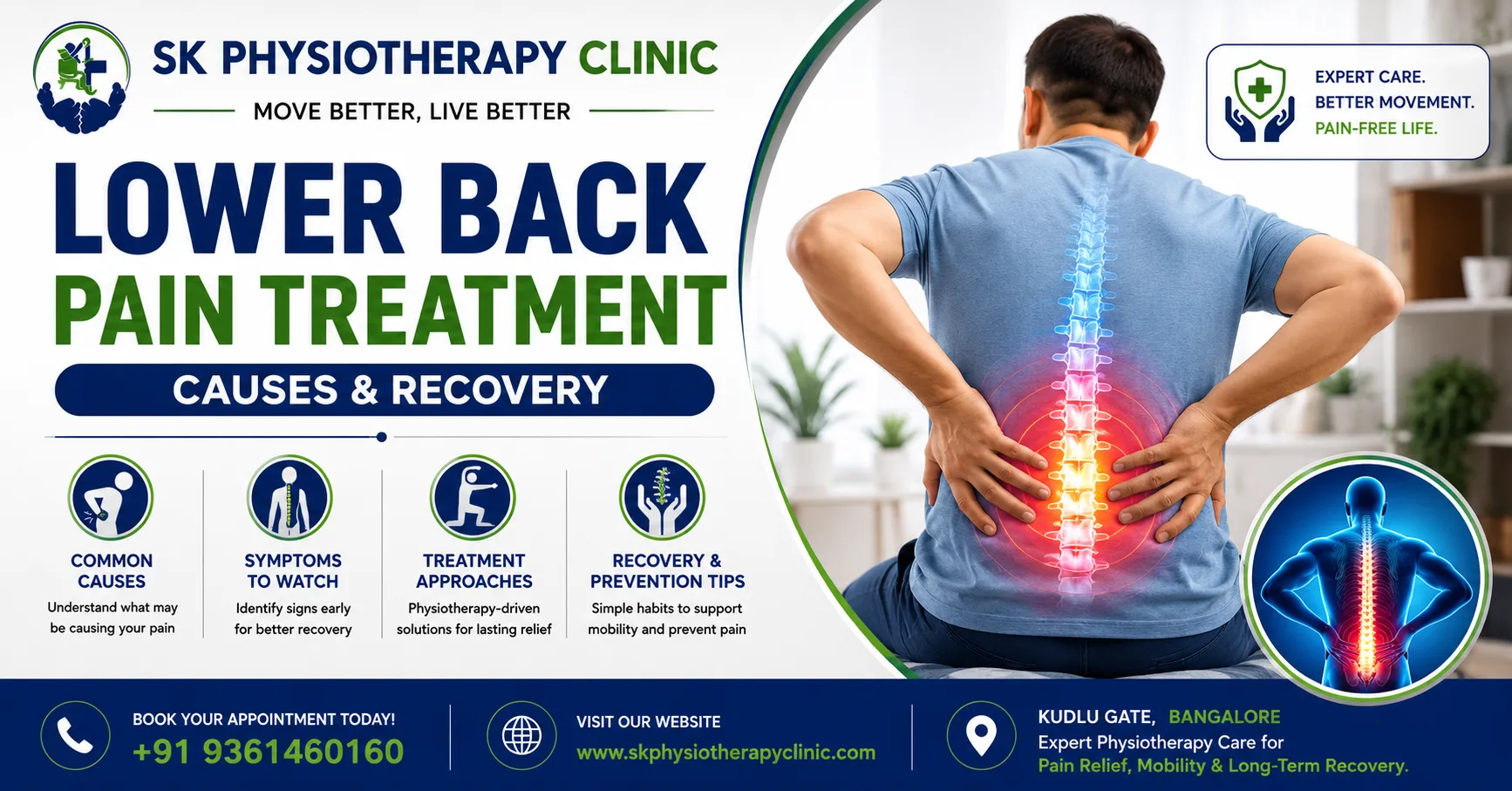
Lower back discomfort can affect more than physical movement. It may influence work, exercise, sleep, daily routines, and overall comfort throughout the day.
If you have noticed stiffness after sitting, discomfort while standing, or difficulty moving comfortably, understanding the reason behind your symptoms is often the first step.
Lower Back Pain Treatment is not one fixed solution. Recovery approaches vary depending on movement patterns, lifestyle, physical demands, symptoms, and individual goals.
This guide explains causes, symptoms, recovery considerations, and how physiotherapy for lower back pain may support mobility and long-term function.
Many people improve by focusing on:
Recovery should always be personalised.
Lower back pain refers to discomfort, stiffness, reduced movement, muscle tightness, or sensitivity around the lower portion of the spine and surrounding muscles.
The lumbar spine plays an important role in:
Because this area supports continuous movement, symptoms may appear gradually or suddenly.
Understanding possible causes is an important part of selecting the right Lower Back Pain Treatment approach.
Lifting, repetitive activity, sudden movement, or increased physical demand may affect muscles and surrounding structures.
Office work and prolonged sitting may contribute to reduced mobility and physical discomfort.
Repeated body positions and movement patterns may influence physical comfort over time.
Movement quality and physical conditioning may affect how the body responds to daily demands.
Exercise intensity and recovery periods may contribute to temporary lower back symptoms.
Previous injuries may influence confidence, movement habits, and activity tolerance.
Symptoms vary between individuals.
Common experiences include:
If symptoms begin affecting everyday activities, professional assessment may help identify contributing factors.
One goal of Lower Back Pain Treatment through physiotherapy is helping people improve movement confidence and return to everyday activities.
Professional assessment may consider:
Treatment recommendations may include:
Helping improve comfortable and efficient movement.
Structured exercises designed around personal recovery goals.
Supporting flexibility, movement quality, and physical confidence.
Helping individuals return gradually to work, exercise, and daily life.
Supporting long-term movement habits and daily routines.
Effective rehabilitation is rarely about avoiding movement completely—it is often about moving appropriately.
Simple habits may support better movement over time.
Avoid staying in one position for long periods.
Appropriate movement may support overall physical function.
Desk setup and body positioning may influence daily comfort.
Consistent physical activity supports general wellbeing.
Recovery often responds better to gradual progression.
Consider speaking with a physiotherapy professional if:
Professional assessment may help guide recovery and movement planning.
Physiotherapy may support movement quality, rehabilitation, mobility, and return to daily activities depending on individual assessment.
Recovery timelines vary depending on symptoms, physical demands, and rehabilitation goals.
Activity recommendations should always be individualised.
Exercise decisions should be based on professional guidance and individual recovery stages.
Lower Back Pain Treatment is not only about reducing discomfort. It is also about improving movement, rebuilding confidence, supporting recovery, and helping people return to activities that matter.
Not all lower back symptoms are the same, which is why personalised assessment and rehabilitation planning can be valuable.
If lower back discomfort is affecting your work, exercise, mobility, or everyday activities, personalised physiotherapy treatment, pain management, and rehabilitation support may help.
SK Physiotherapy Clinic
📍 Kudlu Gate, Bangalore
🌐 www.skphysiotherapyclinic.com
📞 +91 9361460160
Personalised physiotherapy care focused on movement, recovery, rehabilitation, and long-term mobility.
Disclaimer: This article is intended for educational purposes only and should not replace personalised medical or physiotherapy assessment. Individual recovery needs vary.