
How to Fix Tech Neck Before It Gets Worse
How to Fix Tech Neck Before It Gets Worse Spending hours looking at a phone, laptop, or tablet has become...
Read More →
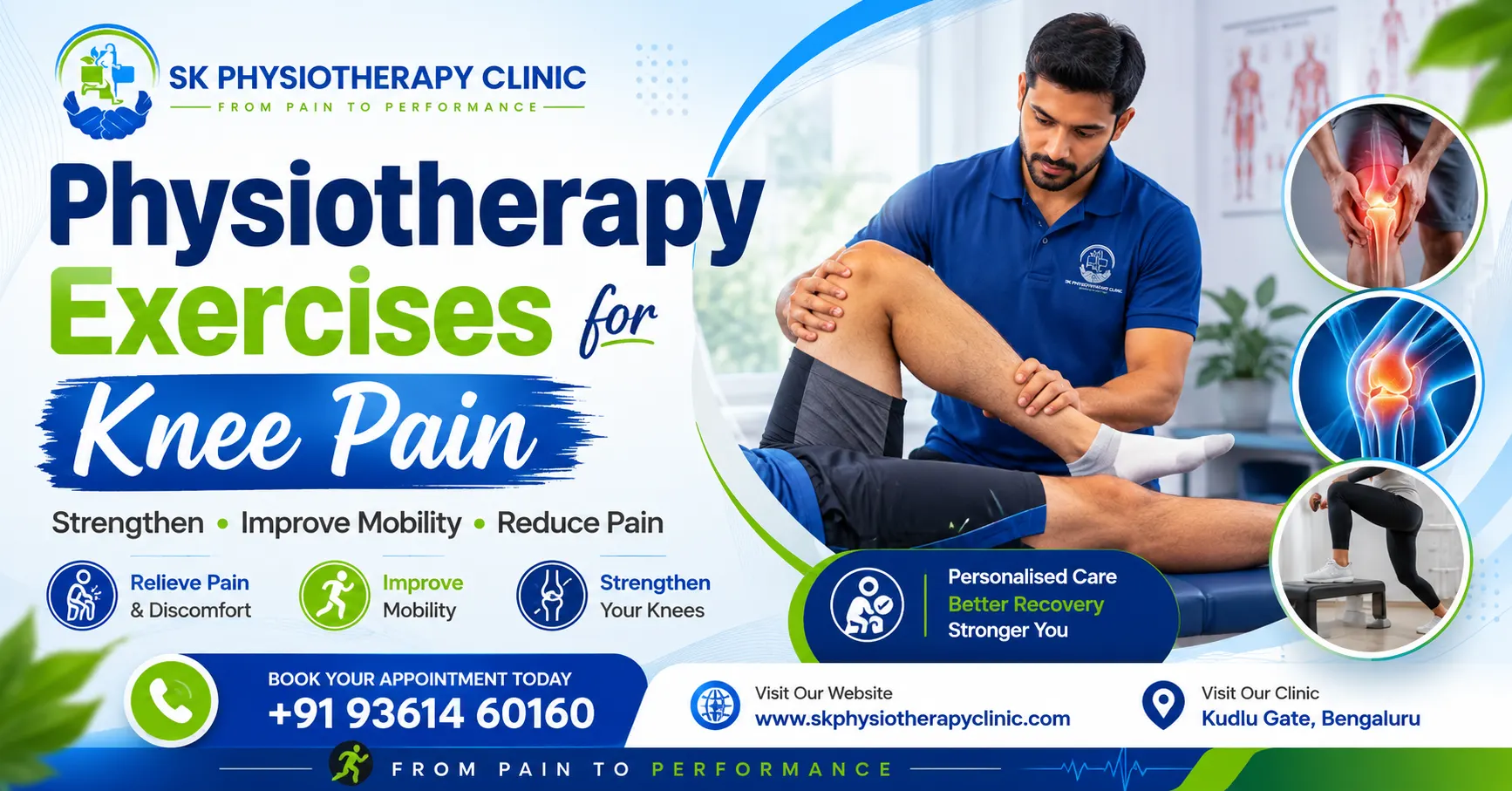
Knee discomfort can affect walking, climbing stairs, exercising, standing for long periods, and overall daily movement. In many cases, reducing activity may lead to reduced flexibility and lower muscle performance over time.
Physiotherapy exercises for knee pain are commonly used to support movement quality, improve muscle activation, encourage flexibility, and help individuals gradually return to everyday activities. A structured rehabilitation approach should always be based on individual symptoms, movement ability, and professional assessment.
This guide explains practical exercise strategies and recovery principles commonly used in physiotherapy for knee pain.
Knee pain refers to discomfort experienced in or around the knee joint and surrounding structures.
Common experiences may include:
The cause of symptoms often determines which knee pain exercises may be most appropriate.
Several factors may contribute to knee discomfort:
Reduced muscle performance may affect movement quality.
Repeated loading may increase strain.
Limited flexibility may influence knee movement.
Structured rehabilitation may support recovery goals.
Exercise-based progression is commonly included.
Long periods of inactivity may affect mobility.
Understanding the cause supports better exercise selection and knee rehabilitation planning.
Appropriately selected physiotherapy exercises for knee pain may support:
Recovery is often supported through progression rather than intensity.
One of the commonly used knee rehabilitation exercises.
How to perform:
Recommended:
Supports controlled muscle engagement and may assist lower limb strengthening.
Steps:
Recommended:
Often included among knee strengthening exercises.
Supports controlled movement and flexibility.
Steps:
Recommended:
This movement is commonly included in exercises for knee mobility.
Supports controlled joint movement.
Steps:
Recommended:
Supports functional movement patterns.
Steps:
Recommended:
Avoid forcing movement depth.
Helps maintain flexibility around the knee.
Steps:
Recommended:
A structured routine may include:
5–10 minutes of gentle movement.
Focus on controlled range of motion.
Progressive strengthening where appropriate.
Allow time between sessions.
Combining movement therapy, exercise therapy, and progression is often included in knee pain treatment exercises.
Avoid:
Consistency usually supports mobility improvement over time.
Regular movement may support recovery goals.
Gentle movement breaks may help.
Movement comfort may improve.
Increase activity step by step.
Assessment may be helpful if:
A personalised rehabilitation plan may help identify suitable physiotherapy exercises for knee pain.
Exercise selection depends on symptoms, movement goals, and assessment findings.
Some exercises may be suitable for home practice when appropriately selected.
Knee strengthening exercises are commonly included within rehabilitation programs.
Frequency varies depending on individual goals and response.
Exercise-based rehabilitation commonly aims to support functional movement.
Recovery timelines vary between individuals.
Knee discomfort can influence movement, activity levels, and overall quality of life. However, appropriately selected physiotherapy exercises for knee pain may support flexibility, mobility, muscle performance, and everyday function when progressed gradually.
If knee symptoms are affecting your routine, consider seeking professional assessment and a personalised rehabilitation plan.
To learn more or book an appointment, contact:
SK Physiotherapy Clinic
📞 +91 93614 60160
🌐 https://skphysiotherapyclinic.com/
Early guidance and structured rehabilitation may help support long-term movement goals.
This article is intended for educational purposes only and does not replace professional medical advice, diagnosis, or treatment. Exercise suitability varies between individuals and should be guided through appropriate professional assessment.