How to Fix Tech Neck Before It Gets Worse

How to Fix Tech Neck Before It Gets Worse Spending hours looking at a phone, laptop, or tablet has become part of everyday life. Unfortunately, these habits often lead to Tech Neck—a condition caused by repeatedly bending the head forward for long periods. If ignored, it can contribute to neck pain, stiffness, headaches, shoulder discomfort, and reduced mobility. Understanding how to fix Tech Neck before it gets worse can help you improve posture, reduce strain on the cervical spine, and protect your long-term neck health. At SK Physiotherapy Clinic, we believe that early education and healthy movement habits play an important role in preventing posture-related pain. What Is Tech Neck? Tech Neck refers to neck pain and muscle strain caused by prolonged use of smartphones, laptops, tablets, and other digital devices while the head is bent forward. The farther the head moves away from its natural position, the greater the load placed on the neck and upper back muscles. Common Causes of Tech Neck Looking Down at Your Phone Using a smartphone for long periods encourages forward head posture. Poor Workstation Setup A low monitor or laptop screen forces your neck into an unhealthy position. Sitting for Long Hours Remaining in the same position increases muscle tightness and joint stiffness. Lack of Movement Not taking regular breaks allows muscles to fatigue more quickly. Early Signs of Tech Neck Recognising symptoms early can prevent long-term problems. Neck Stiffness Difficulty turning your head after working or using your phone. Shoulder Tightness Muscles around the neck and shoulders feel tense. Frequent Headaches Pain may begin at the base of the skull. Poor Posture Rounded shoulders and forward head position become more noticeable. How to Fix Tech Neck Before It Gets Worse Raise Your Screen Keep your phone and monitor closer to eye level. Improve Your Sitting Posture Relax your shoulders and keep your ears aligned over your shoulders. Take Regular Breaks Stand up, stretch, and move every 30–40 minutes. Strengthen Your Neck & Upper Back Simple exercises help improve posture and muscle endurance. Daily Habits That Protect Your Neck Limit unnecessary screen time. Stretch your neck and shoulders regularly. Set up an ergonomic workspace. Stay physically active. Avoid holding your phone below chest level for long periods. When Should You See a Physiotherapist? If neck pain continues despite improving your posture, or if it starts affecting work, sleep, or daily activities, a professional assessment may help identify the underlying cause. Physiotherapy for neck pain focuses on improving movement, correcting posture, strengthening supporting muscles, and reducing recurring discomfort. Frequently Asked Questions Can Tech Neck become permanent? If ignored for a long time, poor posture habits may contribute to long-term muscle imbalance and ongoing discomfort. Can physiotherapy help Tech Neck? Yes. Physiotherapy can improve posture, mobility, muscle strength, and movement patterns. How long does it take to improve Tech Neck? Recovery depends on posture habits, activity levels, and how consistently corrective exercises are performed. Is Tech Neck common among office workers? Yes. Office workers, students, gamers, and anyone using digital devices for long hours are commonly affected. Can children develop Tech Neck? Yes. Increasing screen time means children and teenagers may also experience posture-related neck pain. Is Tech Neck preventable? In many cases, yes. Good posture, regular movement, ergonomic workstations, and strengthening exercises can significantly reduce the risk. Final Thoughts Learning how to fix Tech Neck before it gets worse starts with small daily changes. Improving your posture, reducing prolonged screen time, taking regular movement breaks, and strengthening your neck can help prevent recurring pain and improve your overall wellbeing. Addressing the problem early is often easier than managing long-term discomfort. Looking for Help With Neck Pain? If Tech Neck or recurring neck pain is affecting your daily life, SK Physiotherapy Clinic offers personalised physiotherapy programmes to improve posture, restore mobility, and support long-term neck health. Book your consultation today. 📞 +91 93614 60160 🌐 www.skphysiotherapyclinic.com 📍 Kudlu Gate, Bengaluru How to Fix Tech Neck Before It Gets Worse July 15, 2026 | by SK Physiotherapy Clinic Kudlu Gate How to Fix Tech Neck Before It Gets Worse Spending hours looking at a phone, laptop, or tablet has become… Read More → Why Does Neck Pain Keep Coming Back? Causes & Solutions July 8, 2026 | by SK Physiotherapy Clinic Kudlu Gate Why Does Neck Pain Keep Coming Back? Causes & Solutions Neck pain is one of the most common musculoskeletal problems… Read More → How Poor Posture Causes Neck Pain and How to Fix It July 3, 2026 | by SK Physiotherapy Clinic Kudlu Gate How Poor Posture Causes Neck Pain and How to Fix It Many people spend hours each day working on a… Read More →
Why Does Neck Pain Keep Coming Back? Causes & Solutions

Why Does Neck Pain Keep Coming Back? Causes & Solutions Neck pain is one of the most common musculoskeletal problems affecting people of all ages. While the discomfort may improve for a few days, many people notice that it keeps returning during work, after long drives, or even after waking up in the morning. Understanding why does neck pain keep coming back is the first step towards preventing recurring episodes rather than simply treating the symptoms. SK Physiotherapy Clinic believes education, healthy movement, and early assessment help people make informed decisions about their recovery. Why Does Neck Pain Keep Coming Back? Recurring neck pain often happens because the underlying cause hasn’t been addressed. Pain relief alone doesn’t correct poor posture, weak muscles, repetitive strain, or movement habits that continue placing stress on the neck. Poor Posture Looking down at phones or laptops for long periods increases pressure on the cervical spine. Weak Neck & Shoulder Muscles Reduced muscle support makes the neck more vulnerable to repeated strain. Long Hours of Sitting Remaining in one position for extended periods reduces mobility and increases muscle tightness. Stress & Muscle Tension Emotional stress may cause the neck and shoulders to remain tense throughout the day. Previous Neck Injury Old injuries that haven’t fully recovered may contribute to recurring discomfort. Common Symptoms Recurring neck pain doesn’t always feel the same. Common symptoms include: Neck Stiffness Difficulty turning your head or looking over your shoulder. Shoulder & Upper Back Pain Pain may spread into nearby muscles due to compensation. Headaches Some headaches begin from tension around the neck. Reduced Mobility Simple daily movements become uncomfortable. How to Reduce Recurring Neck Pain Simple lifestyle changes can significantly improve neck health. Improve Your Posture Keep your screen at eye level and avoid looking down for long periods. Take Regular Movement Breaks Stand, stretch, and move every 30–40 minutes. Strengthen Supporting Muscles Regular neck and upper back exercises improve stability. Create an Ergonomic Workspace Adjust your chair, monitor, and keyboard to reduce unnecessary strain. Common Mistakes to Avoid Ignoring Mild Pain Early symptoms are often easier to manage than persistent pain. Using Your Phone for Hours Extended screen time encourages forward head posture. Sleeping Without Proper Support An unsuitable pillow may increase neck stress overnight. Skipping Exercise Lack of movement can contribute to stiffness and muscle weakness. When Should You See a Physiotherapist? If neck pain keeps returning, lasts for more than a few days, or starts affecting your work, sleep, or daily activities, it may be time for a professional assessment. Physiotherapy for neck pain focuses on identifying the root cause, improving posture, restoring mobility, and strengthening the muscles that support the cervical spine. At SK Physiotherapy Clinic, rehabilitation programmes are personalised to your symptoms, lifestyle, and recovery goals. Frequently Asked Questions Why does my neck pain keep coming back? Recurring neck pain is often linked to poor posture, muscle weakness, repetitive strain, or unresolved movement problems. Can poor posture cause recurring neck pain? Yes. Poor posture is one of the leading causes of recurring neck discomfort, especially among office workers and people who frequently use digital devices. Can physiotherapy help recurring neck pain? Yes. Physiotherapy aims to improve movement, posture, muscle strength, and overall neck function while addressing the underlying cause. Is recurring neck pain always serious? Not always, but persistent or worsening pain should be assessed to identify the cause and guide appropriate management. How can I prevent neck pain from returning? Maintaining good posture, staying active, strengthening your neck and upper back, and taking regular breaks during work can help reduce recurring episodes. Should I ignore neck pain if it improves after rest? If neck pain repeatedly returns, professional assessment is recommended even if the symptoms temporarily settle. Final Thoughts If you’ve been wondering why does neck pain keep coming back, the answer often lies in daily habits rather than a single injury. Improving posture, staying active, strengthening supporting muscles, and addressing the underlying cause can help reduce recurring pain and improve long-term neck health. Taking action early may prevent minor discomfort from developing into a more persistent problem. Looking for Professional Neck Pain Care? If recurring neck pain is affecting your work, sleep, or daily routine, SK Physiotherapy Clinic offers personalised physiotherapy to help identify the cause, improve movement, and support long-term recovery. Book your consultation today. 📞 +91 93614 60160 🌐 www.skphysiotherapyclinic.com 📍 Kudlu Gate, Bengaluru How to Fix Tech Neck Before It Gets Worse July 15, 2026 | by SK Physiotherapy Clinic Kudlu Gate How to Fix Tech Neck Before It Gets Worse Spending hours looking at a phone, laptop, or tablet has become… Read More → Why Does Neck Pain Keep Coming Back? Causes & Solutions July 8, 2026 | by SK Physiotherapy Clinic Kudlu Gate Why Does Neck Pain Keep Coming Back? Causes & Solutions Neck pain is one of the most common musculoskeletal problems… Read More → How Poor Posture Causes Neck Pain and How to Fix It July 3, 2026 | by SK Physiotherapy Clinic Kudlu Gate How Poor Posture Causes Neck Pain and How to Fix It Many people spend hours each day working on a… Read More →
How Poor Posture Causes Neck Pain and How to Fix It
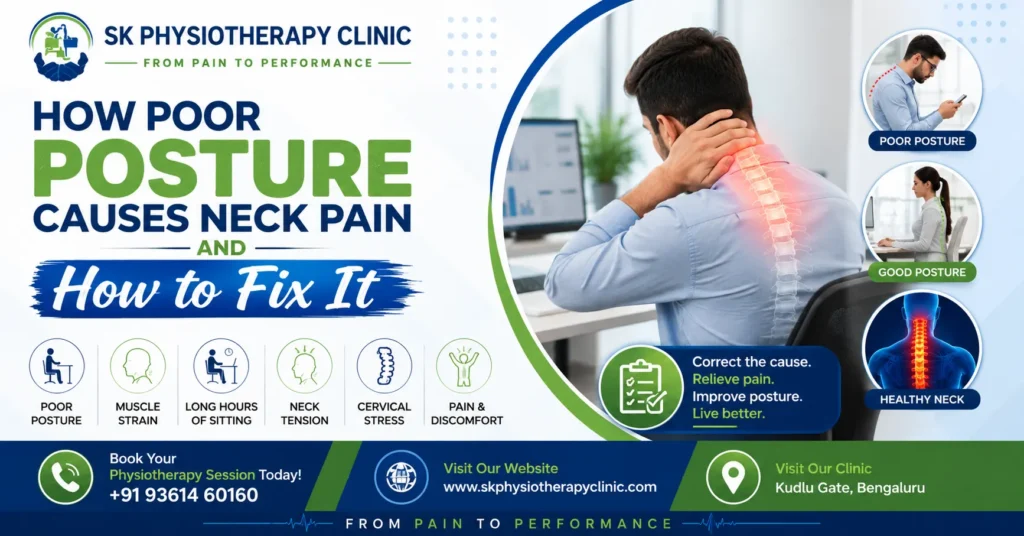
How Poor Posture Causes Neck Pain and How to Fix It Many people spend hours each day working on a computer, using a mobile phone, or sitting for long periods without realising how much pressure it places on the neck. Over time, poor posture can strain the muscles, joints, and ligaments of the cervical spine, leading to stiffness, discomfort, and reduced movement. Understanding how poor posture causes neck pain is the first step towards preventing long-term problems. At SK Physiotherapy Clinic, we encourage healthy posture, regular movement, and personalised rehabilitation to support lasting neck health. Why Does Poor Posture Cause Neck Pain? Your head weighs around 4–6 kg, and your neck supports that weight throughout the day. When your head moves forward because of poor posture, the load on the neck increases significantly. This extra stress can lead to muscle fatigue, joint irritation, and reduced mobility over time. Common Causes Forward Head Posture Frequently looking down at phones or laptops places extra strain on the neck. Prolonged Sitting Remaining in one position for long periods reduces muscle activity and increases stiffness. Poor Workstation Setup Incorrect monitor height, chair position, or keyboard placement can contribute to neck pain from posture. Lack of Movement Sitting without regular breaks may increase muscle tightness and reduce flexibility. Common Signs of Posture-Related Neck Pain Poor posture often develops gradually, so the symptoms may be easy to overlook. You may notice: Neck stiffness Shoulder and neck pain Pain after computer work Headaches starting from the neck Reduced neck movement Muscle tightness Pain while looking down Discomfort during driving or reading How to Fix Poor Posture Simple daily habits can help reduce stress on the neck and improve overall posture. Improve Your Sitting Position Keep your back supported, shoulders relaxed, and feet flat on the floor. Raise Your Screen Position your monitor at eye level to reduce forward head posture. Take Movement Breaks Stand up, stretch, and change positions every 30–45 minutes. Strengthen Your Neck and Upper Back Targeted exercises improve muscle support and help maintain better posture. Stay Active Regular physical activity helps improve flexibility, posture, and spinal health. Best Exercises for Better Neck Posture Chin Tucks Benefits Helps correct forward head posture and strengthens deep neck muscles. Shoulder Blade Squeezes Benefits Improves upper back strength and supports better posture. Neck Side Stretch Benefits Reduces muscle tightness and improves flexibility. Chest Stretch Benefits Helps counteract rounded shoulders caused by prolonged sitting. Common Posture Mistakes to Avoid Looking Down at Your Phone Holding your phone too low increases pressure on the neck. Sitting for Too Long Remaining in one position can lead to stiffness and muscle fatigue. Slouching Rounded shoulders and a curved upper back increase strain on the cervical spine. Ignoring Early Symptoms Mild discomfort may progress if posture habits are not corrected. When Should You See a Physiotherapist? If neck pain continues despite improving your posture, keeps returning, or begins affecting work, sleep, or daily activities, professional assessment may be helpful. Physiotherapy for neck pain focuses on identifying movement problems, improving posture, restoring flexibility, and building strength through personalised rehabilitation. At SK Physiotherapy Clinic, treatment plans are tailored to your lifestyle and recovery goals. Frequently Asked Questions Can poor posture really cause neck pain? Yes. Poor posture places extra stress on the muscles and joints of the cervical spine, which may lead to pain and stiffness over time. How can I improve my posture? Maintain a neutral spine, adjust your workstation, take regular movement breaks, and perform posture exercises consistently. What is forward head posture? It occurs when the head moves in front of the shoulders, increasing strain on the neck muscles and joints. Are neck pain exercises effective? When performed correctly, they can improve flexibility, posture, and muscle strength. When should I seek professional help? If pain lasts for several days, keeps returning, or limits your daily activities, it is advisable to consult a physiotherapist. Can physiotherapy improve posture? Yes. Physiotherapy combines assessment, posture education, exercise therapy, and movement correction to improve posture and reduce recurring neck pain. Final Thoughts Learning how poor posture causes neck pain can help you make simple changes that protect your spine and improve daily comfort. Small adjustments to your sitting posture, workstation, and movement habits can make a meaningful difference. If symptoms continue despite these changes, early physiotherapy assessment can help identify the underlying cause and support long-term recovery. Looking for Professional Neck Pain Care? Poor posture doesn’t have to become a long-term problem. If neck pain is affecting your work or daily activities, SK Physiotherapy Clinic can help you improve posture, restore movement, and build long-term neck health through personalised physiotherapy. Book your consultation today. 📞 +91 93614 60160🌐 www.skphysiotherapyclinic.com📍 Kudlu Gate, Bengaluru 10 Signs You Should See a Physiotherapist for Persistent Pain July 3, 2026 | by SK Physiotherapy Clinic Kudlu Gate How Poor Posture Causes Neck Pain and How to Fix It Many people spend hours each day working on a… Read More → 10 Signs You Should See a Physiotherapist for Persistent Pain July 3, 2026 | by SK Physiotherapy Clinic Kudlu Gate 10 Signs You Should See a Physiotherapist for Persistent Pain Pain is your body’s way of telling you that something… Read More → How to Relieve Lower Back Pain Naturally July 2, 2026 | by SK Physiotherapy Clinic Kudlu Gate How to Relieve Lower Back Pain Naturally Lower back pain is one of the most common musculoskeletal problems affecting people… Read More →
10 Signs You Should See a Physiotherapist for Persistent Pain
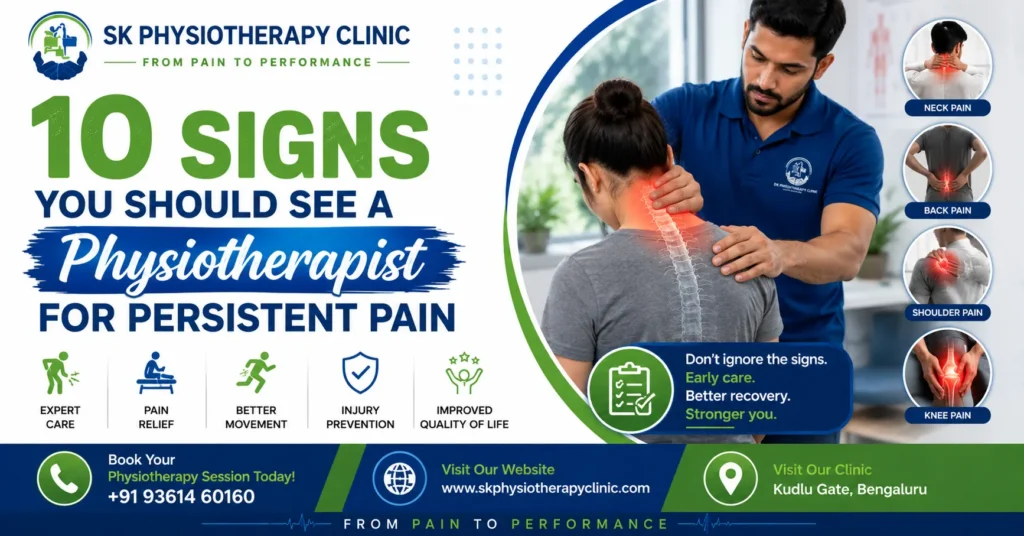
10 Signs You Should See a Physiotherapist for Persistent Pain Pain is your body’s way of telling you that something needs attention. While minor aches often improve with rest, persistent pain that continues for days or keeps returning shouldn’t be ignored. Understanding the signs you should see a physiotherapist can help you address the underlying cause early and reduce the risk of long-term movement problems. At SK Physiotherapy Clinic, we encourage early assessment to support recovery, improve mobility, and help people return to their daily activities with confidence. Why Persistent Pain Shouldn’t Be Ignored Pain that lasts for several days or keeps returning may indicate an underlying muscle, joint, ligament, tendon, or nerve problem. Early physiotherapy assessment helps identify contributing factors before they begin affecting movement, strength, or everyday activities. 10 Signs You Should See a Physiotherapist Persistent Pain Pain that continues despite rest may require professional assessment. Limited Movement Difficulty bending, reaching, walking, or turning comfortably may indicate reduced joint or muscle function. Pain During Daily Activities Pain while sitting, standing, climbing stairs, lifting, or working should not become part of your normal routine. Frequent Sports Injuries Recurring injuries may indicate poor movement patterns, muscle weakness, or reduced flexibility. Neck or Back Pain That Keeps Returning Repeated episodes of neck or lower back pain often benefit from structured rehabilitation. Joint Stiffness Stiffness that limits movement, especially in the morning or after activity, should be assessed. Muscle Weakness Difficulty performing everyday tasks may indicate reduced muscle strength or nerve involvement. Balance or Walking Problems Changes in balance, coordination, or walking pattern may require physiotherapy assessment. Pain After Surgery Rehabilitation can help restore movement, strength, and confidence following many surgical procedures. Pain Affecting Sleep Pain that interrupts your sleep or prevents comfortable rest should be professionally evaluated. How Physiotherapy Can Help Identify the Root Cause Assessment focuses on understanding why pain is occurring rather than only treating symptoms. Improve Movement Rehabilitation helps restore flexibility, strength, and functional movement. Reduce Recurrence Movement education and exercise therapy help lower the risk of recurring problems. Support Long-Term Recovery Treatment plans are tailored to your condition, lifestyle, and recovery goals. Conditions Commonly Managed with Physiotherapy Physiotherapy may help people experiencing: Lower back pain Neck pain Shoulder pain Knee pain Sports injuries Joint stiffness Muscle strains Post-surgical rehabilitation Sciatica Balance and mobility problems Frequently Asked Questions Can I visit a physiotherapist without severe pain? Yes. Early assessment may help prevent minor problems from becoming more serious. How long should I wait before seeing a physiotherapist? If pain persists for several days, keeps returning, or limits movement, professional assessment is recommended. Can physiotherapy help chronic pain? Many people with persistent musculoskeletal pain benefit from personalised rehabilitation programmes. Is physiotherapy only for injuries? No. Physiotherapy also supports posture, mobility, balance, rehabilitation, and recovery after surgery. Will I receive exercises? Yes. Exercise therapy is commonly included as part of a personalised rehabilitation plan. Can physiotherapy help prevent future injuries? Improving strength, flexibility, posture, and movement patterns may reduce the likelihood of recurring injuries. Final Thoughts Recognising the signs you should see a physiotherapist can help you take action before pain begins affecting your quality of life. Early assessment, personalised rehabilitation, and healthy movement habits often play an important role in supporting long-term recovery and overall mobility. Looking for Professional Physiotherapy Care? If persistent pain is limiting your daily activities, SK Physiotherapy Clinic is here to help. Our personalised physiotherapy approach focuses on understanding the cause of your symptoms and supporting long-term recovery through evidence-informed rehabilitation. Book your consultation today. 📞 +91 93614 60160 🌐 www.skphysiotherapyclinic.com 📍 Kudlu Gate, Bengaluru How to Relieve Lower Back Pain Naturally July 3, 2026 | by SK Physiotherapy Clinic Kudlu Gate How to Relieve Lower Back Pain Naturally Lower back pain is one of the most common musculoskeletal problems affecting people… Read More → How to Relieve Lower Back Pain Naturally July 2, 2026 | by SK Physiotherapy Clinic Kudlu Gate How to Relieve Lower Back Pain Naturally Lower back pain is one of the most common musculoskeletal problems affecting people… Read More → Physiotherapy Exercises for Knee Pain June 12, 2026 | by SK Physiotherapy Clinic Kudlu Gate Physiotherapy Exercises for Knee Pain Knee discomfort can affect walking, climbing stairs, exercising, standing for long periods, and overall daily… Read More →
How to Relieve Lower Back Pain Naturally

How to Relieve Lower Back Pain Naturally Lower back pain is one of the most common musculoskeletal problems affecting people of all ages. It may develop from poor posture, prolonged sitting, heavy lifting, muscle strain, or sports injuries, making everyday activities uncomfortable. Understanding how to relieve lower back pain naturally starts with identifying the cause and adopting healthy movement habits. At SK Physiotherapy Clinic, we encourage an education-first approach, helping people understand their condition while supporting recovery through evidence-informed physiotherapy and personalised rehabilitation when needed. Why Does Lower Back Pain Happen? The lower back supports your body’s weight and movement every day. When muscles, joints, discs, ligaments, or nerves are placed under excessive stress, pain and stiffness can develop. Common Causes Poor Posture Long hours of sitting or standing with poor posture increase stress on the lower back. Muscle Strain Improper lifting or sudden movements can strain the muscles supporting the spine. Weak Core Muscles Weak abdominal and back muscles reduce spinal stability and increase injury risk. Disc or Nerve Problems Conditions such as sciatica or disc irritation may cause pain that travels into the hips or legs. How to Relieve Lower Back Pain Naturally Many people achieve lower back pain relief by making simple changes to their daily routine. Stay Active Regular walking and gentle movement help reduce stiffness and keep the spine mobile. Improve Your Posture Maintain a neutral spine while sitting, standing, and lifting to reduce unnecessary strain. Stretch Regularly Gentle stretching improves flexibility and reduces muscle tightness around the hips and lower back. Strengthen Your Core Core exercises improve spinal support and are often recommended as part of physiotherapy for lower back pain. Sleep Comfortably Choose a supportive sleeping position that keeps your spine aligned. Best Lower Back Pain Exercises Pelvic Tilt Benefits Improves spinal mobility while gently activating the core muscles. Cat-Cow Stretch Benefits Encourages flexibility and reduces stiffness in the spine. Bridge Exercise Benefits Strengthens the glutes, core, and lower back muscles. Knee-to-Chest Stretch Benefits Helps relieve lower back tightness and improves flexibility. When Should You See a Physiotherapist? If your pain lasts longer than a few days, keeps returning, or begins affecting work, sleep, or daily activities, professional assessment is recommended. Physiotherapy focuses on identifying the underlying cause, improving movement, and developing a personalised lower back rehabilitation plan. At SK Physiotherapy Clinic, treatment is tailored to your lifestyle, symptoms, and recovery goals rather than following a one-size-fits-all approach. Frequently Asked Questions Can lower back pain go away naturally? Yes. Mild cases often improve with movement, stretching, and healthy posture habits. Is walking good for lower back pain? Gentle walking can help improve mobility and reduce stiffness. Which exercises help lower back pain? Pelvic tilts, bridges, cat-cow stretches, and knee-to-chest stretches are commonly recommended. Can poor posture cause lower back pain? Yes. Poor posture places additional stress on the muscles and joints supporting the spine. When should I seek professional help? If pain persists, worsens, or limits your daily activities, consult a physiotherapist. Can physiotherapy prevent recurring back pain? Yes. A structured programme combining exercise therapy, movement education, and strengthening can help reduce future episodes. Final Thoughts Learning how to relieve lower back pain naturally is about more than finding temporary relief. Staying active, improving posture, performing the right lower back pain exercises, and addressing the underlying cause can support long-term spine health. While self-care helps many people, persistent or recurring pain should be assessed early to prevent ongoing problems. Looking for Expert Physiotherapy Care? If lower back pain is affecting your daily routine, SK Physiotherapy Clinic can help you understand the cause and create a personalised rehabilitation plan to improve movement and recovery. Book your consultation today. 📞 +91 93614 60160 🌐 www.skphysiotherapyclinic.com 📍 Kudlu Gate, Bengaluru Physiotherapy Exercises for Knee Pain July 2, 2026 | by SK Physiotherapy Clinic Kudlu Gate How to Relieve Lower Back Pain Naturally Lower back pain is one of the most common musculoskeletal problems affecting people… Read More → Physiotherapy Exercises for Knee Pain June 12, 2026 | by SK Physiotherapy Clinic Kudlu Gate Physiotherapy Exercises for Knee Pain Knee discomfort can affect walking, climbing stairs, exercising, standing for long periods, and overall daily… Read More → Neck Pain Treatment: Symptoms, Causes & Relief June 11, 2026 | by SK Physiotherapy Clinic Kudlu Gate Neck Pain Treatment: Symptoms, Causes & Relief Neck discomfort can affect more than physical movement. It may influence work performance,… Read More →
Physiotherapy Exercises for Knee Pain
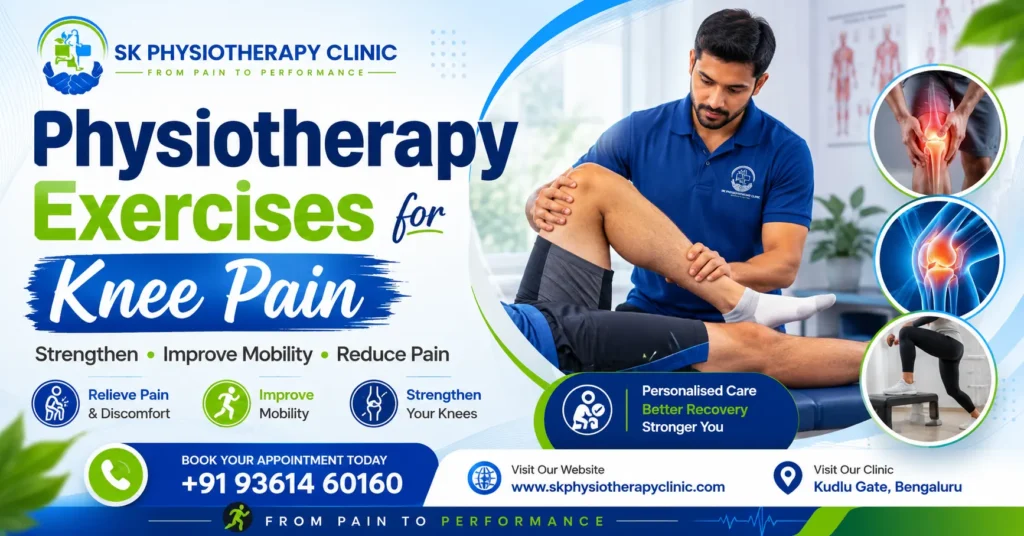
Physiotherapy Exercises for Knee Pain Knee discomfort can affect walking, climbing stairs, exercising, standing for long periods, and overall daily movement. In many cases, reducing activity may lead to reduced flexibility and lower muscle performance over time. Physiotherapy exercises for knee pain are commonly used to support movement quality, improve muscle activation, encourage flexibility, and help individuals gradually return to everyday activities. A structured rehabilitation approach should always be based on individual symptoms, movement ability, and professional assessment. This guide explains practical exercise strategies and recovery principles commonly used in physiotherapy for knee pain. What Is Knee Pain? Knee pain refers to discomfort experienced in or around the knee joint and surrounding structures. Common experiences may include: Pain while walking Stiffness after sitting Difficulty climbing stairs Reduced movement Temporary swelling Muscle weakness Reduced activity tolerance The cause of symptoms often determines which knee pain exercises may be most appropriate. Common Causes of Knee Pain Several factors may contribute to knee discomfort: Muscle Weakness Reduced muscle performance may affect movement quality. Sports and Activity-Related Stress Repeated loading may increase strain. Reduced Mobility Limited flexibility may influence knee movement. Previous Injury Recovery Structured rehabilitation may support recovery goals. Post-Surgical Rehabilitation Exercise-based progression is commonly included. Daily Movement Habits Long periods of inactivity may affect mobility. Understanding the cause supports better exercise selection and knee rehabilitation planning. How Physiotherapy Exercises for Knee Pain May Support Recovery Appropriately selected physiotherapy exercises for knee pain may support: Improved movement confidence Better lower limb control Increased flexibility Improved mobility Better muscle activation Functional recovery goals Gradual return to activity Recovery is often supported through progression rather than intensity. Best Physiotherapy Exercises for Knee Pain 1. Quadriceps Activation (Quad Sets) One of the commonly used knee rehabilitation exercises. How to perform: Sit or lie comfortably. Straighten the leg. Tighten the thigh muscles. Hold for 5–10 seconds. Relax slowly. Recommended: 10 repetitions 2–3 sets 2. Straight Leg Raise Supports controlled muscle engagement and may assist lower limb strengthening. Steps: Lie comfortably. Bend one leg. Raise the opposite leg. Lower slowly. Recommended: 10–12 repetitions 2 sets Often included among knee strengthening exercises. 3. Heel Slides Supports controlled movement and flexibility. Steps: Lie comfortably. Slide the heel toward the body. Return gradually. Recommended: 10 repetitions This movement is commonly included in exercises for knee mobility. 4. Seated Knee Extension Supports controlled joint movement. Steps: Sit upright. Extend the knee. Pause briefly. Lower slowly. Recommended: 10–15 repetitions 5. Mini Squats Supports functional movement patterns. Steps: Stand with support. Bend slightly. Return upright. Recommended: 8–10 repetitions Avoid forcing movement depth. 6. Hamstring Stretch Helps maintain flexibility around the knee. Steps: Sit comfortably. Extend one leg. Lean forward gently. Recommended: Hold for 20–30 seconds Repeat 2–3 times Building a Simple Knee Recovery Routine A structured routine may include: Warm-Up 5–10 minutes of gentle movement. Mobility Phase Focus on controlled range of motion. Strength Phase Progressive strengthening where appropriate. Recovery Allow time between sessions. Combining movement therapy, exercise therapy, and progression is often included in knee pain treatment exercises. Common Mistakes That May Slow Progress Avoid: Exercising through sharp discomfort Increasing intensity too quickly Poor exercise technique Skipping recovery Inconsistent routine Consistency usually supports mobility improvement over time. Daily Habits That May Support Knee Function Stay Active Regular movement may support recovery goals. Reduce Long Sitting Periods Gentle movement breaks may help. Wear Comfortable Footwear Movement comfort may improve. Progress Gradually Increase activity step by step. When Should You Consider Professional Assessment? Assessment may be helpful if: Symptoms continue for several weeks Walking becomes difficult Mobility reduces Swelling increases Daily activities become challenging A personalised rehabilitation plan may help identify suitable physiotherapy exercises for knee pain. FAQs Which exercise is best for knee pain? Exercise selection depends on symptoms, movement goals, and assessment findings. Can I do knee exercises at home? Some exercises may be suitable for home practice when appropriately selected. Are strengthening exercises useful? Knee strengthening exercises are commonly included within rehabilitation programs. How often should exercises be performed? Frequency varies depending on individual goals and response. Can physiotherapy support return to normal activities? Exercise-based rehabilitation commonly aims to support functional movement. How long does recovery usually take? Recovery timelines vary between individuals. Final Thoughts Knee discomfort can influence movement, activity levels, and overall quality of life. However, appropriately selected physiotherapy exercises for knee pain may support flexibility, mobility, muscle performance, and everyday function when progressed gradually. If knee symptoms are affecting your routine, consider seeking professional assessment and a personalised rehabilitation plan. To learn more or book an appointment, contact: SK Physiotherapy Clinic📞 +91 93614 60160🌐 https://skphysiotherapyclinic.com/ Early guidance and structured rehabilitation may help support long-term movement goals. Medical Disclaimer This article is intended for educational purposes only and does not replace professional medical advice, diagnosis, or treatment. Exercise suitability varies between individuals and should be guided through appropriate professional assessment. Physiotherapy Exercises for Knee Pain June 12, 2026 | by SK Physiotherapy Clinic Kudlu Gate Physiotherapy Exercises for Knee Pain Knee discomfort can affect walking, climbing stairs, exercising, standing for long periods, and overall daily… Read More → Neck Pain Treatment: Symptoms, Causes & Relief June 11, 2026 | by SK Physiotherapy Clinic Kudlu Gate Neck Pain Treatment: Symptoms, Causes & Relief Neck discomfort can affect more than physical movement. It may influence work performance,… Read More → Lower Back Pain Treatment: Causes & Recovery April 10, 2026 | by SK Physiotherapy Clinic Kudlu Gate Lower Back Pain Treatment: Causes & Recovery Lower back discomfort can affect more than physical movement. It may influence work,… Read More →
Neck Pain Treatment: Symptoms, Causes & Relief

Neck Pain Treatment: Symptoms, Causes & Relief Neck discomfort can affect more than physical movement. It may influence work performance, concentration, sleep quality, exercise routines, and everyday comfort. Many people notice symptoms gradually—starting with mild stiffness and progressing into discomfort while turning the head, sitting at work, or performing routine activities. The good news is that understanding possible causes and selecting an appropriate Neck Pain Treatment approach may help support movement, improve comfort, and restore confidence in daily activities. This guide explains symptoms, causes, recovery considerations, and how physiotherapy for neck pain may support mobility and overall function. Quick Answer: What Helps Neck Pain? Many people support recovery by focusing on: Understanding contributing factors Maintaining comfortable movement Gradual rehabilitation Improving mobility Managing posture habits Seeking professional assessment when symptoms persist Recovery approaches should always be individualised. What Is Neck Pain? Neck pain refers to discomfort, stiffness, reduced mobility, muscle tightness, or sensitivity around the neck and surrounding structures. The neck supports: Head movement Daily posture Sitting and working positions Physical activity Visual positioning Functional movement Because the neck remains active throughout the day, physical stress and movement limitations may sometimes contribute to symptoms. Common Causes of Neck Pain Understanding possible contributing factors is an important part of selecting the right Neck Pain Treatment approach. Prolonged Sitting and Desk Work Extended sitting and limited movement may contribute to stiffness and reduced comfort. Posture and Daily Habits Body positioning throughout work and daily activities may influence neck comfort. Muscle Tension Physical strain and repetitive movement may increase muscle tightness. Reduced Mobility Movement limitations may affect physical comfort and flexibility. Sports and Exercise Demands Exercise patterns and training load may influence neck movement. Recovery Following Previous Injury Past injuries may influence movement confidence and physical activity. Common Symptoms of Neck Pain Symptoms may vary between individuals. Common experiences include: Neck stiffness Muscle tightness Reduced movement Difficulty turning the head Discomfort after sitting Temporary reduction in activity Reduced flexibility Physical discomfort during movement If symptoms begin affecting daily activities, professional assessment may help guide recovery. How Physiotherapy Supports Neck Pain Treatment One goal of Neck Pain Treatment through physiotherapy is helping people improve movement confidence and support daily function. Professional assessment may consider: Physical demands Symptom history Mobility Posture habits Functional limitations Recovery goals Treatment recommendations may include: Movement Support Helping improve comfortable movement patterns. Exercise-Based Rehabilitation Exercises structured around movement goals. Mobility Development Supporting flexibility and physical confidence. Recovery Planning Helping people gradually return to normal activities. Activity and Lifestyle Guidance Supporting sustainable movement habits. Rehabilitation is usually focused on improving function rather than avoiding movement completely. Daily Habits That May Support Recovery Simple habits may support better comfort over time. Move More Frequently Avoid staying in one position for extended periods. Improve Workstation Comfort Screen and seating positions may influence physical comfort. Stay Physically Active Appropriate activity may support movement quality. Build Sustainable Habits Consistency often supports long-term outcomes. Progress Gradually Recovery may respond better to gradual changes. When Should You Consider Professional Assessment? Consider speaking with a physiotherapy professional if: Symptoms continue Daily activities become uncomfortable Movement becomes restricted Exercise feels difficult Symptoms repeatedly return Professional assessment may help guide rehabilitation. Frequently Asked Questions Can physiotherapy support Neck Pain Treatment? Physiotherapy may support movement quality, mobility, rehabilitation, and return to daily activities depending on individual assessment. How long does neck recovery take? Recovery timelines vary depending on symptoms and physical demands. Should complete rest be avoided? Movement recommendations should always be individualised. Can exercise continue? Exercise decisions should be based on recovery stage and professional guidance. Final Thoughts Neck Pain Treatment is not only about reducing discomfort. It is also about improving movement, supporting recovery, rebuilding confidence, and returning comfortably to everyday life. Not every neck symptom has the same contributing factors, which is why personalised assessment and rehabilitation planning can be valuable. If neck discomfort is affecting your work, exercise, posture, mobility, or daily routine, personalised physiotherapy treatment, pain management, and rehabilitation support may help. Speak With SK Physiotherapy Clinic SK Physiotherapy Clinic📍 Kudlu Gate, Bangalore🌐 www.skphysiotherapyclinic.com📞 +91 9361460160 Personalised physiotherapy care focused on movement, recovery, rehabilitation, and long-term mobility. Disclaimer:This article is intended for educational purposes only and should not replace personalised medical or physiotherapy assessment. Individual recovery needs vary. Neck Pain Treatment: Symptoms, Causes & Relief June 11, 2026 | by SK Physiotherapy Clinic Kudlu Gate Neck Pain Treatment: Symptoms, Causes & Relief Neck discomfort can affect more than physical movement. It may influence work performance,… Read More → Lower Back Pain Treatment: Causes & Recovery April 10, 2026 | by SK Physiotherapy Clinic Kudlu Gate Lower Back Pain Treatment: Causes & Recovery Lower back discomfort can affect more than physical movement. It may influence work,… Read More →
Lower Back Pain Treatment: Causes & Recovery
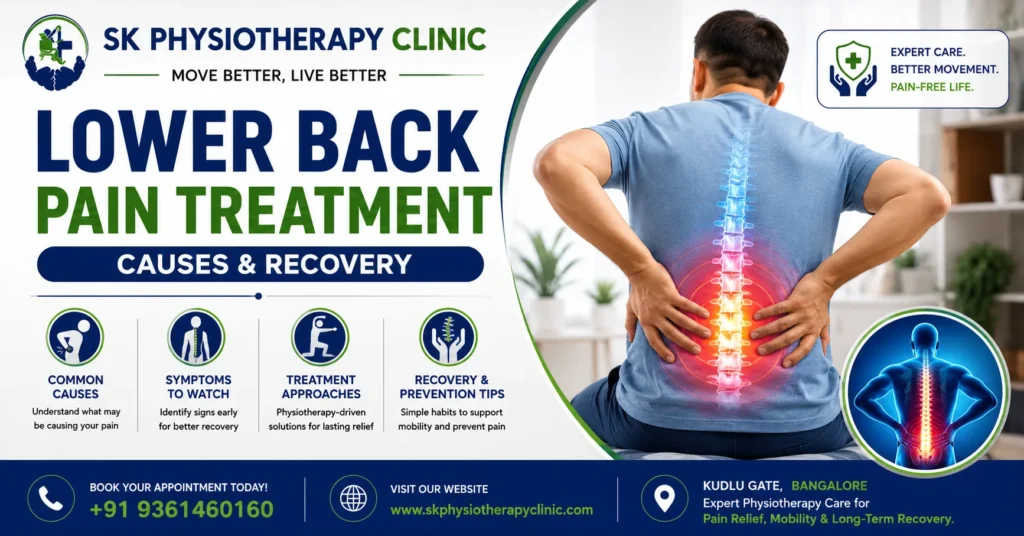
Lower Back Pain Treatment: Causes & Recovery Lower back discomfort can affect more than physical movement. It may influence work, exercise, sleep, daily routines, and overall comfort throughout the day. If you have noticed stiffness after sitting, discomfort while standing, or difficulty moving comfortably, understanding the reason behind your symptoms is often the first step. Lower Back Pain Treatment is not one fixed solution. Recovery approaches vary depending on movement patterns, lifestyle, physical demands, symptoms, and individual goals. This guide explains causes, symptoms, recovery considerations, and how physiotherapy for lower back pain may support mobility and long-term function. Quick Answer: What Helps Lower Back Pain? Many people improve by focusing on: Understanding possible contributing factors Maintaining appropriate movement Gradual rehabilitation Consistent physical activity Improving mobility and daily habits Seeking professional assessment when needed Recovery should always be personalised. What Is Lower Back Pain? Lower back pain refers to discomfort, stiffness, reduced movement, muscle tightness, or sensitivity around the lower portion of the spine and surrounding muscles. The lumbar spine plays an important role in: Walking Standing Sitting Bending Exercise Lifting Daily activities Because this area supports continuous movement, symptoms may appear gradually or suddenly. Common Causes of Lower Back Pain Understanding possible causes is an important part of selecting the right Lower Back Pain Treatment approach. Muscle Strain and Physical Overload Lifting, repetitive activity, sudden movement, or increased physical demand may affect muscles and surrounding structures. Long Hours of Sitting Office work and prolonged sitting may contribute to reduced mobility and physical discomfort. Posture and Movement Habits Repeated body positions and movement patterns may influence physical comfort over time. Reduced Mobility and Conditioning Movement quality and physical conditioning may affect how the body responds to daily demands. Sports and Exercise Demands Exercise intensity and recovery periods may contribute to temporary lower back symptoms. Recovery Following Previous Injury Previous injuries may influence confidence, movement habits, and activity tolerance. Common Symptoms of Lower Back Pain Symptoms vary between individuals. Common experiences include: Lower back discomfort Muscle tightness Morning stiffness Reduced flexibility Difficulty bending Reduced mobility Discomfort after sitting Temporary reduction in physical activity Pain during movement If symptoms begin affecting everyday activities, professional assessment may help identify contributing factors. How Physiotherapy Supports Lower Back Pain Treatment One goal of Lower Back Pain Treatment through physiotherapy is helping people improve movement confidence and return to everyday activities. Professional assessment may consider: Daily physical demands Symptom history Mobility Movement patterns Functional limitations Recovery goals Treatment recommendations may include: Movement Support Helping improve comfortable and efficient movement. Exercise-Based Rehabilitation Structured exercises designed around personal recovery goals. Mobility Development Supporting flexibility, movement quality, and physical confidence. Recovery Planning Helping individuals return gradually to work, exercise, and daily life. Activity and Lifestyle Guidance Supporting long-term movement habits and daily routines. Effective rehabilitation is rarely about avoiding movement completely—it is often about moving appropriately. Daily Habits That May Support Recovery Simple habits may support better movement over time. Move Frequently Avoid staying in one position for long periods. Stay Physically Active Appropriate movement may support overall physical function. Improve Workstation Comfort Desk setup and body positioning may influence daily comfort. Build Sustainable Activity Consistent physical activity supports general wellbeing. Progress Gradually Recovery often responds better to gradual progression. When Should You Consider Professional Assessment? Consider speaking with a physiotherapy professional if: Symptoms continue Daily activities become difficult Exercise feels uncomfortable Movement becomes restricted Symptoms repeatedly return Professional assessment may help guide recovery and movement planning. Frequently Asked Questions Can physiotherapy support Lower Back Pain Treatment? Physiotherapy may support movement quality, rehabilitation, mobility, and return to daily activities depending on individual assessment. How long does recovery usually take? Recovery timelines vary depending on symptoms, physical demands, and rehabilitation goals. Should complete rest be avoided? Activity recommendations should always be individualised. Can exercise still be performed? Exercise decisions should be based on professional guidance and individual recovery stages. Final Thoughts Lower Back Pain Treatment is not only about reducing discomfort. It is also about improving movement, rebuilding confidence, supporting recovery, and helping people return to activities that matter. Not all lower back symptoms are the same, which is why personalised assessment and rehabilitation planning can be valuable. If lower back discomfort is affecting your work, exercise, mobility, or everyday activities, personalised physiotherapy treatment, pain management, and rehabilitation support may help. Speak With SK Physiotherapy Clinic SK Physiotherapy Clinic📍 Kudlu Gate, Bangalore🌐 www.skphysiotherapyclinic.com📞 +91 9361460160 Personalised physiotherapy care focused on movement, recovery, rehabilitation, and long-term mobility. Disclaimer: This article is intended for educational purposes only and should not replace personalised medical or physiotherapy assessment. Individual recovery needs vary. Neck Pain Treatment: Symptoms, Causes & Relief June 11, 2026 | by SK Physiotherapy Clinic Kudlu Gate Neck Pain Treatment: Symptoms, Causes & Relief Neck discomfort can affect more than physical movement. It may influence work performance,… Read More → Lower Back Pain Treatment: Causes & Recovery April 10, 2026 | by SK Physiotherapy Clinic Kudlu Gate Lower Back Pain Treatment: Causes & Recovery Lower back discomfort can affect more than physical movement. It may influence work,… Read More →